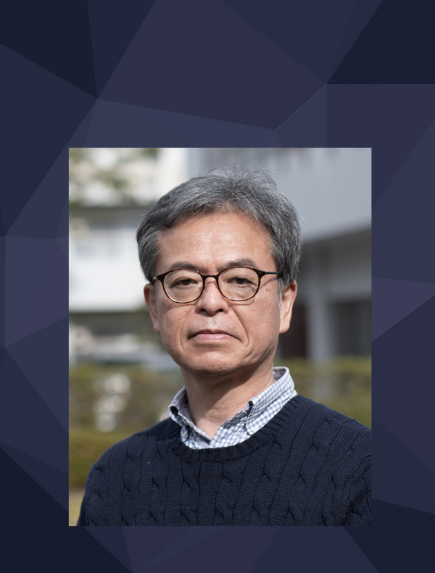
Oversea speaker

TechTalk – (Cancelled) Technology for Bioelectronic Medicine

February 2 2024 (Friday) 2:30-3:30pm
Neurological conditions affect one in six people, imposing significant health, economic and societal burden. Bioelectronic medicine aims to restore or replace neurological function with the help of implantable electronic devices. Unfortunately, significant technological limitations prohibit these devices from reaching patients at scale, as implants are bulky, require invasive implantation procedures, elicit a pronounced foreign body response, and show poor treatment specificity and off-target effects. Over the past decade, new devices made using methods from microelectronics industry have been shown to overcome these limitations. Recent literature provides powerful demonstrations of thin film implants that are miniaturised, ultra-conformal, stretchable, multiplexed, integrated with different sensors and actuators, bioresorbable, and minimally invasive. I will discuss the state-of-the-art of these new technologies and the barriers than need to be overcome to reach patients at scale.

TechTalk – Insights on the Future Development of Engineering and Technologies in China

Speaker: Academician C.C. Chan, Honorary Professor, The University of Hong Kong, Distinguished Chair Professor, Hong Kong Polytechnic University, Academician, Chinese Academy of Engineering, Fellow, Royal Academy of Engineering   About the TechTalk We would like to extend our sincere gratitude and appreciation to Academician C.C. Chan for sharing with us two videos of his speech on …

TechTalk – Insights on the Future Development of Engineering and Technologies in China Read More »

TechTalk – Filtration Solutions for Sustainable Environment

January 30 2023 (Tuesday) 4:00-5:30pm
We are developing filtration technologies to benefit sustainable environment. The Center for Filtration Research (CFR) at the University of Minnesota, collaborating with 20 leading international filtration manufacturers and end users, was established to find filtration solutions to mitigate PM2.5 and other environmental pollutants. There are more than 15 on-going fundamental and applied research projects on air, gas and liquid filtration. Five projects will be presented: 1. reduction of aerosol concentration in classrooms to prevent virus transmissions; 2. electret and nanofiber media to improve filtration performance; 3. indoor air cleaning using gas purifiers, ionizers, and UV-C; 4. real-time image detection of airborne biological particles; 5. temperature resistant nano-scale membrane for enhanced ceramic wall-flow filter performance. Large scale air cleaning towers are established in Xi’an and Yancheng in China to mitigate urban air PM2.5and CO2 (Yancheng) with two additional towers in Delhi, India. All these research and development activities are helping to improve sustainable environment.

TechTalk – Nanomaterials-based Soft Human-centric Optoelectronics

December 13 2023 (Wednesday) 3:30-4:30pm
Although recent research efforts in material development, device designs, and fabrication strategies have resulted in meaningful progresses to the goal of the human-centric optoelectronics, significant challenges still exist toward high-performance soft light emitting devices and curved photodetector arrays. In this talk, material assembly and fabrication strategies for the soft human-centric optoelectronics will be presented. First, recent processes in flexible, foldable, and stretchable quantum-dot light emitting diodes (QLEDs) will be presented. Technologies for high-resolution quantum dot patterning as well as passive matrix array of QLEDs with unconventional form factors will be explained. After that, wide FoV, miniaturized module-size, minimal optical-aberration, high-sensitivity, and deep depth-of-field artificial vision systems inspired from aquatic animal eyes will be presented. Unique stretchable image sensors whose image planes are well matched to the single-lens-based optical system enable such artificial visions. More recent progresses in the bio-inspired artificial visions with amphibious imaging and light-balancing capabilities will be also explained. These deformable QLEDs and bio-inspired artificial visions are expected to provide new opportunities for the advanced mobile electronics and robotics.

TechTalk – 3D Functional Mesosystems: From Neural Interfaces to Environmental Monitors

December 13 2023 (Wednesday) 4:30-5:30pm
Complex, three dimensional (3D) micro/nanostructures in biology provide sophisticated, essential functions in even the most basic forms of life. Compelling opportunities exist for analogous 3D structures in man-made devices, but existing design options are highly constrained by comparatively primitive capabilities in fabrication and growth. Recent advances in mechanical engineering and materials science provide broad access to diverse, highly engineered classes of 3D architectures, with characteristic dimensions that range from nanometers to centimeters and areas that span square centimeters or more. The approach relies on geometric transformation of preformed two dimensional (2D) precursor micro/nanostructures and/or devices into extended 3D layouts by controlled processes of substrate-induced compressive buckling, where the bonding configurations, thickness distributions and other parameters control the final configurations. This talk reviews the key concepts and focuses on the most recent developments with example applications in areas ranging from mesoscale microfluidic/electronic networks as neural interfaces, to bio-inspired microfliers as environmental sensing platforms.

TechTalk – Doing the Right Thing for the Wrong Reason: How a Vision for Ubiquitous Computing Can Be Reconciled to Have Better Impact

November 27 2023 (Monday) 4:00-5:00pm
Professor Gregory Abowd have been speaking and writing about the idea of an Internet of Materials (IoM) for nearly a decade. It started as a way to rethink Mark Weiser’s vision of ubiquitous computing in a more modern context, with the same hopeful zeal that Weiser presented in his writings from the late 1980s and early 1990’s. Professor Abowd will summarize how that re-interpretation has inspired his work, and the work of a growing community, for nearly a decade. From those involved in the fundamental understanding of computation to those involved in the practical development and deployment of computation, the future seems bright. We are moving towards a world of increased ubiquity of computation. There appears to be no end in sight for the increased ubiquity of all things computational. From a technical perspective, this is wonderful. More recently, professor Abowd have been forced to think about this vision through a different lens. How we justify any new vision of a technological future must be better grounded in the human motivation and potential impact. After explaining the “successes” of IoM, he will explain why he has fallen far short of a compelling motivation. But there are more compelling motivations, having to do with health, usable security and privacy, and, most importantly, sustainability. We MUST begin questioning a lot of the assumptions on how to make, operate, and dispose of computational objects. IoM is no longer a journey for a hopeful “visionary” to play out his fanciful predictions for the future. It is a mandate to address the fundamental hazards of our current trajectory towards ubiquitous computing.

TechTalk – Live “Street View” of Intracellular Organelles’ Interactions

November 13 2023 (Monday) 3:00-4:00pm
The number of colors in fluorescence microscopy is far less than the types of intracellular compartments. I will present our recent progress in super resolution imaging and deep convolutional neuronal networks to segment 15 subcellular structures. This approach bypasses the limitations of multi-color imaging, accelerates the imaging speed by one order of magnitude, and can accurately segment vesicle organelles with similar shapes and sizes. The super-resolution advantages were demonstrated in resolving the 3D anatomic nanostructures at different mitotic phases and tracking the fast dynamic interactions among nine intracellular compartments in live cell. We show transfer learning ability of our networks among different microscopes, different cell types, and even complexed system of living tissues.

TechTalk – Subsurface Technologies to Support the Energy Transition

October 12 2023 (Thursday) 3-4pm
To avoid catastrophic consequences of climate change, our current carbon-emitting energy infrastructure needs to be replaced with an energy system free from atmospheric carbon emissions. The enormous scale of this energy transition requires multiple energy sources to be developed, including carbon-free wind, solar, geothermal, and nuclear as well as fossil-fuel-based systems where the carbon dioxide from the waste stream is captured and stored securely in deep subsurface geologic formations, in a technology known as Carbon Capture and Storage, or CCS. Subsurface geologic formations are also likely to be used to provide short-term storage for energy-carrying fluids like hydrogen and natural gas, making the subsurface environment critical to the energy transition. In this talk, I will discuss practical computational approaches to analyze geological storage systems as well as economic and political issues associated with CCS. I will also briefly discuss basic climate change facts, as part of a proposed general curriculum for Environmental Literacy.

TechTalk – Quantitative Predictive Theories through Integration of Quantum, Statistical, and Irreversible Thermodynamics

August 28, 2023 (Monday) 2-3pm
Thermodynamics is a science concerning the state of a system, whether it is stable, metastable, or unstable. Its derivatives to natural variables give fundamental physico-chemical properties of the system. It is historically divided into four categories: equilibrium thermodynamics by Gibbs, statistical thermodynamics by Gibbs and Landau, irreversible thermodynamics by Onsager and Prigogine, and quantum mechanics. The development of density function theory (DFT) enabled the quantitative prediction of properties of the ground state of a system from quantum mechanics. Their integration into predictive theories will be discussed in this presentation along with future perspectives. It will be shown that the zentropy theory combines the bottom-up DFT predictions with the revised top-down statistical thermodynamics, while the theory of cross phenomena keeps the entropy production due to irreversible processes in the combine law of thermodynamics to revise the Onsager flux equations. The zentropy theory is capable of quantitatively predicting free energy landscape, singularity and emergent divergences of properties at critical point free of parameters, while the theory of cross phenomena can predict the coefficients of internal processes between non-conjugate variables.

TechTalk – Theoretical Concepts and Innovative Laboratory Techniques for Estimating the Effective Permeability of Rocks: Applications to the Longyou Claystone

The Longyou Caves represent an important historical site in China that has undergone periodic water level changes over several centuries. The ground water flow through the intact rock and fractures is an important factor in the geotechnical assessment of the site. The Environmental Geomechanics Laboratory at McGill University has focused on the development of innovative theoretical approaches and experimental facilities for wide range of rocks including Indiana Limestone, the Cobourg Limestone, the Vermont Granite and the Lac du Bonnet Granite, using both steady state and transient techniques. In this Teck Talk, Professor Selvadurai will present a range of experimental techniques, their theoretical interpretations that can be used to estimate of fluid transport processes through intact rocks that can be described by Darcy’s law. The theoretical and experimental techniques are used to determine the intact permeability of Longyou claystone recovered from the site.