Third exhibition

3D Printed Anti-counterfeiting Labels At the Microscale

Counterfeiting threatens the global economy and security. According the report issued by the United States Patent and Trademark Office (USPTO) in 2020 “the value of global counterfeiting and pirated products is estimated US $ 4.5 trillion a year.” Despite enormous efforts, conventional anti-counterfeiting approaches such as QR codes can be easily fabricated due to limited data encryption capacity on a 2D in-plane space.

How can we increase the encryption density in a limited space?

3D Printed Anti-counterfeiting Labels At the Microscale Read More »

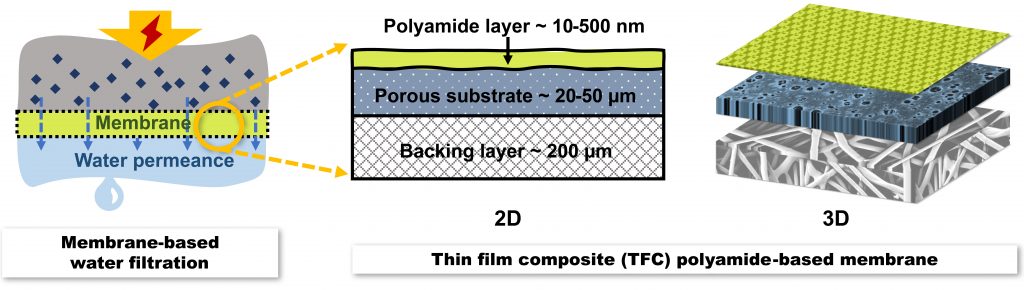
Membrane Technology for Clean Water and Energy

Clean water and energy are vital for human activity and socio-economic development. This project focuses on developing more effective reverse osmosis (RO) and nanofiltration (NF) membranes and processes. Professor Tang’s team has pioneered the development of nano-foaming theory and interlayer structure to regulate membranes with excellent performance.

Membrane Technology for Clean Water and Energy Read More »

Development and Evaluation of an Immersive Virtual Reality-based Exercise System for Upper Limb Motor Exercises in Patients after Stroke: A Proof-of-concept Randomized Controlled Trial

An immersive virtual reality-based exercise system was developed to support poststroke upper limb exercises. In a 2-week randomized controlled trial, fifty patients used the system for exercises (intervention) or a sham entertainment program (control). The findings demonstrate that the system can improve shoulder joint motion and is safe and acceptable.

Development and Evaluation of an Immersive Virtual Reality-based Exercise System for Upper Limb Motor Exercises in Patients after Stroke: A Proof-of-concept Randomized Controlled Trial Read More »

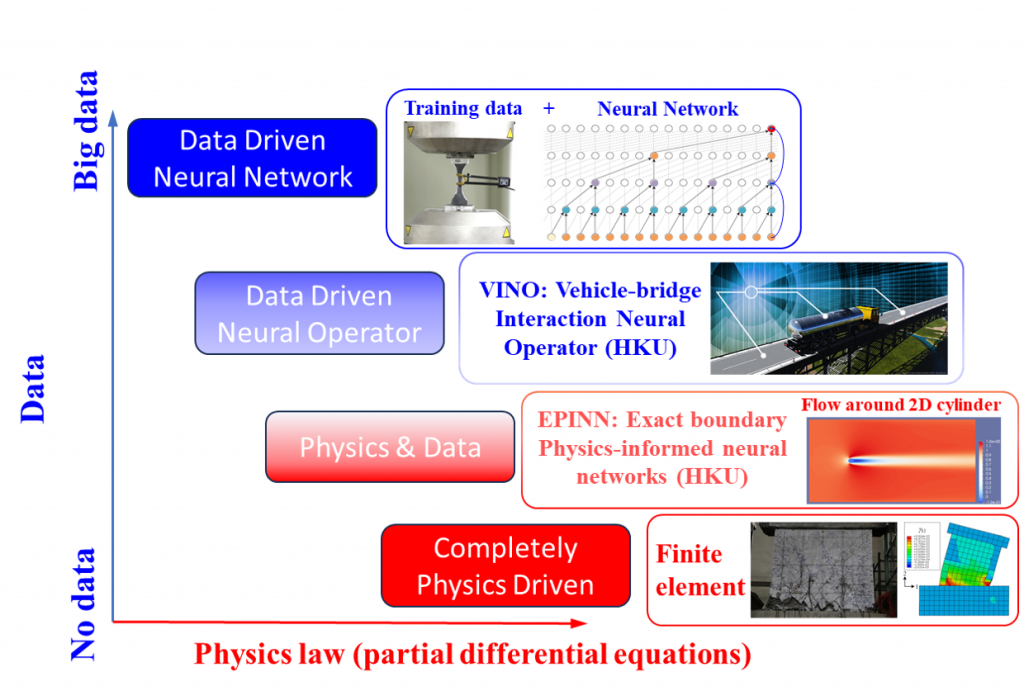
Artificial Intelligence for Structural Simulation and Health Monitoring

To address challenges and future developments in structural engineering, Dr. Wang has developed a deep-learning-based platform, which contains (1) physics-informed neural networks (EPINN) for structural simulation and (2) state-of-the-art neural operator (VINO) for structural health monitoring.

Artificial Intelligence for Structural Simulation and Health Monitoring Read More »

DipµChip – An Automated Tool for Point-of-care Disease diagnostics

DipµChip is an automated capillary microfluidic-based point-of-care (POC) microsystem allowing rapid and portable detection of various high-impact and mortality diseases, such as pneumonia, sepsis, malaria, and COVID-19. Our Mission is “Empowering access to adequate clinical care for high-impact disease patients using molecular biology and point-of-care microfluidics.” End-users of DipµChip include clinics, hospitals, homes, and assisted living healthcare facilities, democratizing access to adequate clinical care, and saving precious lives of patients in need.

DipµChip – An Automated Tool for Point-of-care Disease diagnostics Read More »

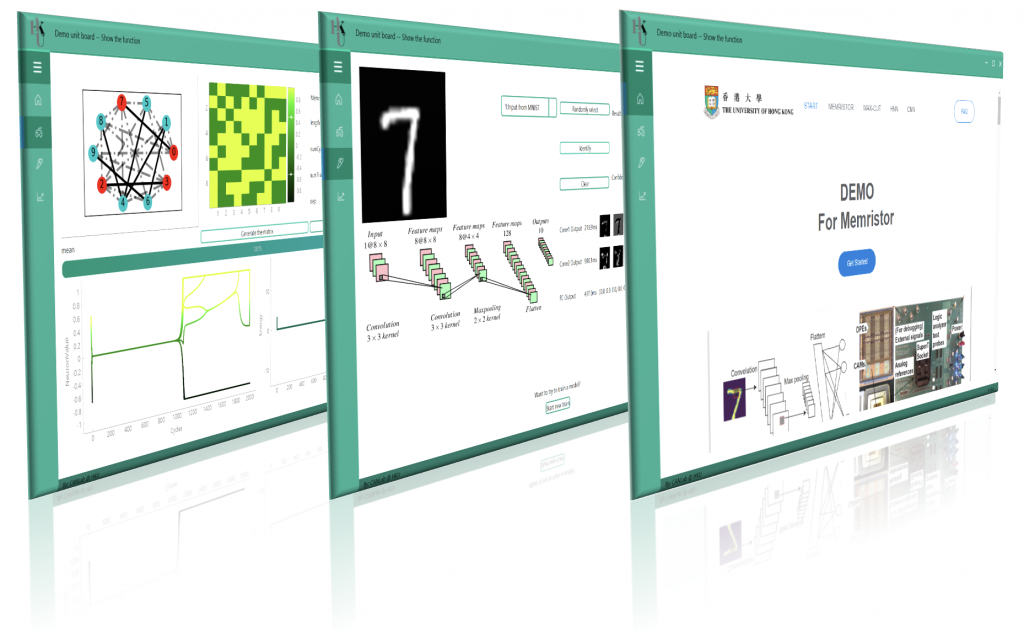
Memristor-based Neuromorphic Computing Systems

The evolution of artificial intelligence (AI) and the growing demands from Big Data are hampered by current hardware performance, spurring extensive research into accelerator chips. As silicon transistors reach physical limits, there is an urgent need to explore new computing paradigms based on unconventional devices.
Dr Li’s team is developing new brain-inspired computing paradigms using emerging memory devices, aiming to showcase the potential of these neuromorphic computing systems in laboratory settings.

Memristor-based Neuromorphic Computing Systems Read More »